How to Build a SWOT Analysis From Customer Reviews (With Examples)
A step-by-step guide to creating SWOT analyses from customer feedback. Learn how to turn raw reviews into strategic insights for product, marketing, and competitive intelligence.
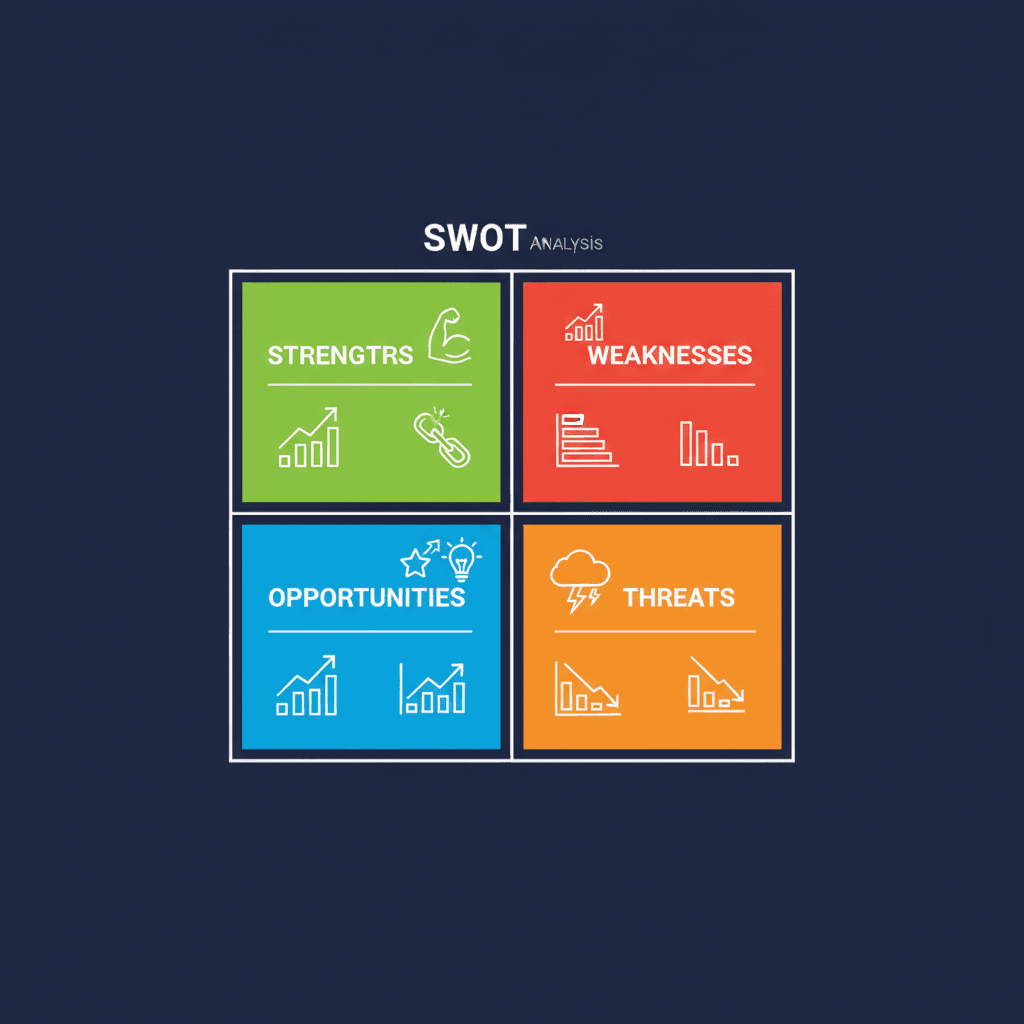
A SWOT analysis is one of the most powerful strategic frameworks in business. But most teams build their SWOT from internal assumptions and gut feelings — not actual customer data.
What if you could build a SWOT directly from what customers are saying in their reviews?
What Is a Review-Based SWOT Analysis?
A review-based SWOT takes the traditional framework — Strengths, Weaknesses, Opportunities, Threats — and populates each quadrant using real customer feedback. Every insight is backed by actual quotes, sentiment scores, and mention frequency.
This approach eliminates the biggest problem with traditional SWOTs: they're subjective. When your SWOT is built from 500+ customer reviews, it reflects reality, not opinion.
Step-by-Step: Building a SWOT From Reviews
1. Collect Reviews From Multiple Platforms
Don't limit yourself to one source. A product's Amazon reviews might skew different from its Trustpilot reviews because the audiences differ. Pull from as many platforms as possible:
- E-commerce: Amazon, Walmart, Best Buy
- Software/SaaS: G2, Capterra, TrustRadius
- Consumer: Trustpilot, Yelp, Google Reviews
- Mobile: App Store, Google Play
2. Identify Strengths (What Customers Love)
Look for features or aspects that consistently receive positive sentiment. Key signals:
- Repeated praise for the same feature across multiple reviews
- Comparative statements like "better than [competitor]"
- Emotional language: "love," "amazing," "game-changer"
Example from a project management tool: > Strength: "Intuitive interface" — mentioned in 234 reviews with +0.89 avg sentiment > Supporting quote: "I've tried Asana, Monday, and Trello. This is the first tool my entire team actually adopted without training."
3. Identify Weaknesses (Recurring Complaints)
Look for negative sentiment clusters. Key signals:
- Same complaint appearing across multiple platforms
- Star ratings that drop below average for specific features
- Phrases like "wish it had," "frustrating," "deal-breaker"
Example: > Weakness: "Mobile app performance" — mentioned in 156 reviews with -0.62 avg sentiment > Supporting quote: "Desktop is great but the mobile app crashes constantly. I can't rely on it when I'm away from my desk."
4. Identify Opportunities (Unmet Needs)
See What Your Reviews Really Say
Paste any product URL and get an AI-powered SWOT analysis in under 60 seconds.
Try It Free →Opportunities hide in feature requests and "I wish" statements. Key signals:
- "It would be great if..."
- "The only thing missing is..."
- Features that competitors have and reviewers compare against
Example: > Opportunity: "Calendar integration" — requested in 89 reviews > Supporting quote: "If this integrated with Google Calendar, it would replace every other tool I use."
5. Identify Threats (Competitive Pressure)
Threats emerge from competitor mentions and switching signals. Key signals:
- "I'm switching to [competitor]"
- "Competitor X does this better"
- Price comparison complaints
- Feature parity gaps
Example: > Threat: "Notion migration" — mentioned in 67 reviews > Supporting quote: "Notion just launched their project management features. Unless you add AI, I'm moving over."
Real-World Example: Wireless Earbuds SWOT
Here's what a complete review-based SWOT looks like for a mid-range wireless earbuds product, built from 1,200 reviews across Amazon, Best Buy, and Reddit:
| Quadrant | Finding | Reviews | Sentiment |
|---|---|---|---|
| Strength | Sound quality | 456 | +0.91 |
| Strength | Battery life (8+ hrs) | 312 | +0.87 |
| Weakness | Ear tip fit issues | 198 | -0.54 |
| Weakness | Companion app bugs | 134 | -0.71 |
| Opportunity | Spatial audio support | 89 | request |
| Opportunity | Workout-proof certification | 67 | request |
| Threat | AirPods Pro comparison | 223 | -0.32 |
| Threat | Price increase complaints | 156 | -0.48 |
This SWOT immediately tells the product team: double down on sound quality in marketing, fix the companion app, add spatial audio to the roadmap, and address the price-value perception before customers switch to AirPods.
Automating the Process
Building a SWOT manually from 1,200 reviews would take days. AI tools like Sentimyne automate the entire process — paste a product URL, and get a complete SWOT with sentiment scores, theme clustering, and competitor insights in under 60 seconds.
The free plan includes 2 reports per month, so you can try it on your own product or a competitor's.
Key Takeaways
- Review-based SWOTs are more objective than traditional assumption-based analyses
- Pull from multiple platforms to avoid platform-specific bias
- Feature-level sentiment scoring gives you precision that overall ratings can't
- Competitor mentions in reviews are the most honest competitive intelligence you'll find
- Automate the process — manual review analysis doesn't scale past a few hundred reviews
Ready to try AI-powered review analysis?
Get 2 free SWOT reports per month. No credit card required.
Start FreeRelated Articles
Download a free SWOT analysis template designed for customer review data. Learn how to map review themes to Strengths, Weaknesses, Opportunities, and Threats — with a filled-in example and step-by-step instructions.
AI Review Analyzer: Turn Thousands of Reviews Into Strategic Insights in 60 SecondsDiscover how AI review analyzers transform customer feedback from 12+ platforms into SWOT analyses, sentiment scores, and competitor intelligence — in under 60 seconds.
Sentiment Analysis vs. SWOT Analysis: Which One Should You Use?Understand the differences between sentiment analysis and SWOT analysis for product research. Learn when to use each approach and how combining them delivers the best results.